Kindwell acquires clinician-founded therapy practices
You built the practice. What happens to it next should be just as deliberate.
Kindwell acquires clinician-founded practices and then operates the business side of them — hiring, billing, credentialing, technology and compliance. The name, the clinicians and the clinical standards stay local. You do not have to have decided to sell to have the first conversation; this page is what a founder should understand before starting any process at all.

Not a decision to stop believing in the practice.
Selling can be a decision about what the practice needs next — and about who should be responsible for getting it there. It does not have to mean the founder stopped believing in what they built.
The practice has become a company, whether you intended it or not.
Payroll, credentialing, billing, hiring, systems — an organization arrived alongside the clinical work.
Your own capacity is now part of the operating model.
Decisions route through one person because that is how the practice grew, not because anyone designed it that way.
The question changes shape.
It stops being “can I keep doing this?” and becomes “what should this practice become without me carrying all of it?”

Fig. 02 — the part of the week that never changed.
The local practice
The name, the clinicians, the room, the reputation.
Kindwell underneath
Recruiting, intake, revenue cycle, credentialing, finance, marketing, technology.
Fig. 03 — what changes hands, in one drawing.
The acquisition changes who carries the company — not why the practice mattered.
Kindwell owns and builds the operating company underneath a practice: recruiting, intake, revenue cycle, credentialing, finance, marketing and technology.
The model is designed around a simple bet — that an earned local name and a clinical culture are the assets, and that institutional capability belongs behind them rather than over the top of them.
The important questions usually come before the price.
These are reasonable questions to answer before price becomes the center of the conversation. The full set — with what we can and can’t state as policy — is on the founder questions pad.
What happens to the name?
Our intention is that it stays on the door.
What happens to my therapists and team?
Specifics belong in the transaction; the intent is a better week for the people already there.
What is my role after the acquisition?
Designed with you, not assigned from a template.
What actually changes?
Mostly who carries the work a clinician never trained for.
How is the practice valued?
No public formula. Terms come after we understand the business.
What happens between a first conversation and closing?
A sequence — conversation, understanding, terms, diligence, transition.

We are not trying to buy every therapy practice.
We tend to be built for clinician-founded practices with a local reputation that took years to earn, a real team beyond the founder, and enough operating complexity that real infrastructure would change the week — where the practice can be strengthened without being erased.
Fig. 04 — the hard part is already built. It is this room, and who is in it.
A sequence, not a countdown.
Timing varies with the practice, so we don’t publish one. The order matters more than a number of weeks would.
A conversation
You describe the practice and what you’d want protected. An introduction can begin with the practice as you describe it today.
Understanding the practice
The team, the demand, the clinical identity, and how the week actually works today.
Terms, if there’s a fit
Terms only become relevant if both sides decide there is enough fit to keep exploring.
Diligence and documentation
The information and documents needed depend on the practice and the transaction.
Transition planning
Who says what, and in what order — planned with the founder and clinical leadership.
Timing, documentation and any binding obligations depend on the transaction; the sequence above is illustrative.
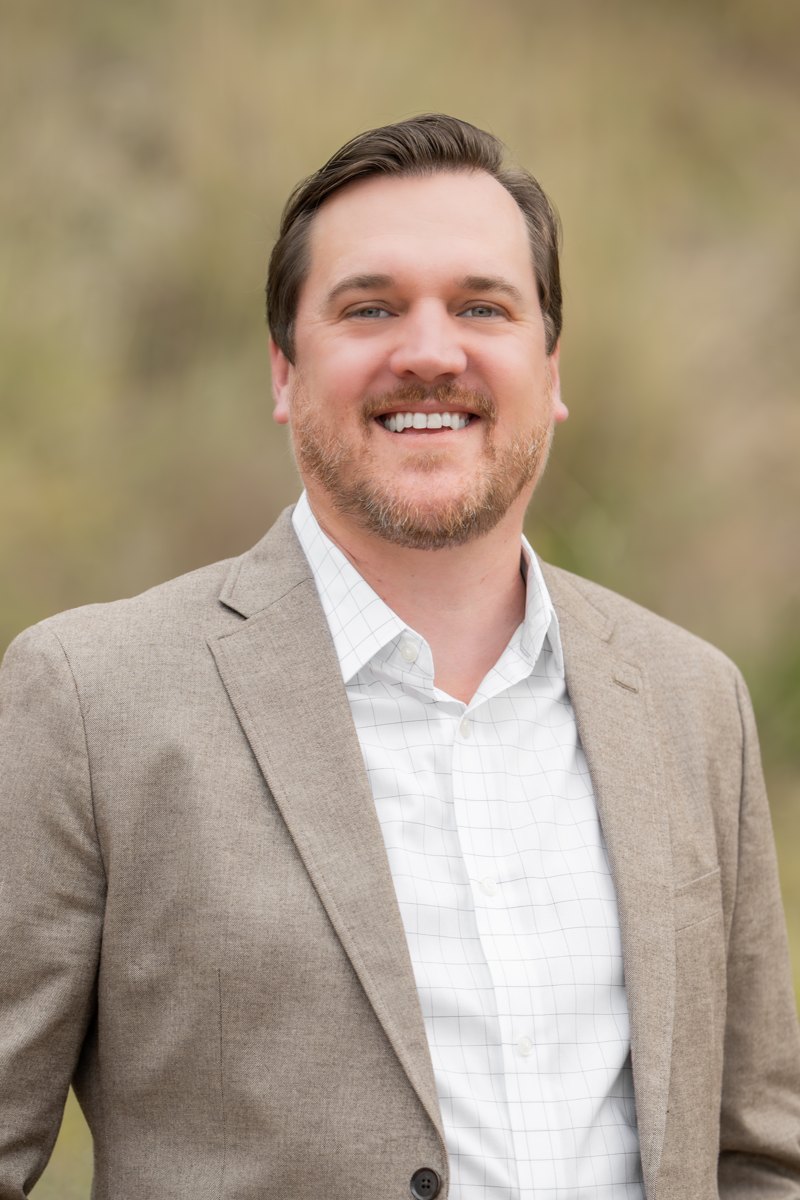
Kyle Bender, LMFT — Clinical Transition Team
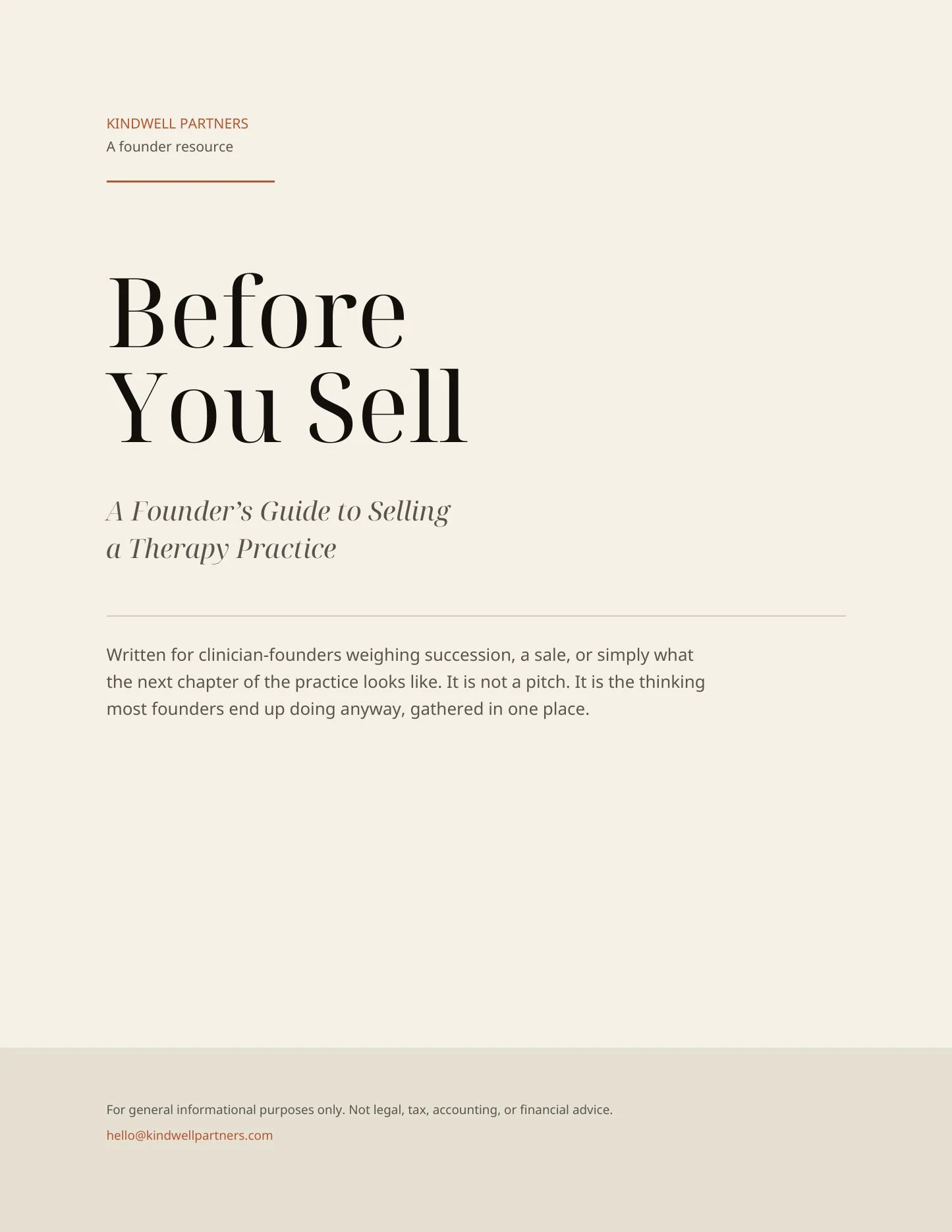
Fig. 05 — 9 pages, PDF, no gate.
Read this before you talk to anyone — including us.
A plain-language walkthrough of what selling a clinician-founded practice actually involves — what a buyer looks at, what founders worry about, what gets gathered, and the questions worth asking anyone who approaches you. Written for owners who are only thinking about it.
No form, no gate, no follow-up sequence.
Selling the practice is a decision. Talking about it isn’t.
Tell us about the practice you built and what you’d want protected. The first conversation is simply to understand whether the model is worth exploring further.